
 EN
EN  English
 русский
 Español
 عربى
عربىHow Does A Multi-Hole Wire Stripping Machine Improve Cable Processing Efficiency?
In many factories and workshops, wire stripping is not a simple side task. Thick copper or aluminum core wires often come with hard insulation that is difficult to remove by hand. Manual tools take time, require experience, and often create uneven stripping results. This affects later processes such as crimping, welding, or cable assembly. When wire diameters vary, switching tools or adjusting methods becomes another burden for operators.
A multi-hole wire stripping machine is designed to respond to these common production pressures. Instead of relying on repeated manual operations, it brings consistency and stability to daily wire preparation, especially when dealing with a wide range of wire thicknesses.
How Multi-Hole Design Supports Flexible Production
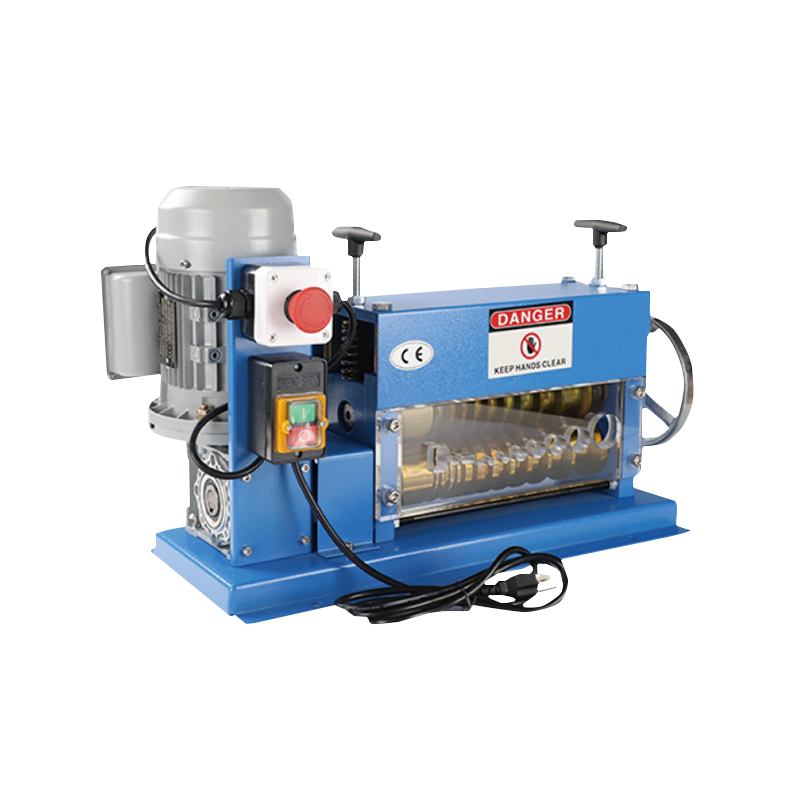
One of the main advantages of a multi-hole structure is adaptability. Different holes are matched to different wire diameters, allowing operators to process various cables without constant tool changes. For factories that handle mixed wire sizes during one shift, this layout saves adjustment time and keeps workflow steady.
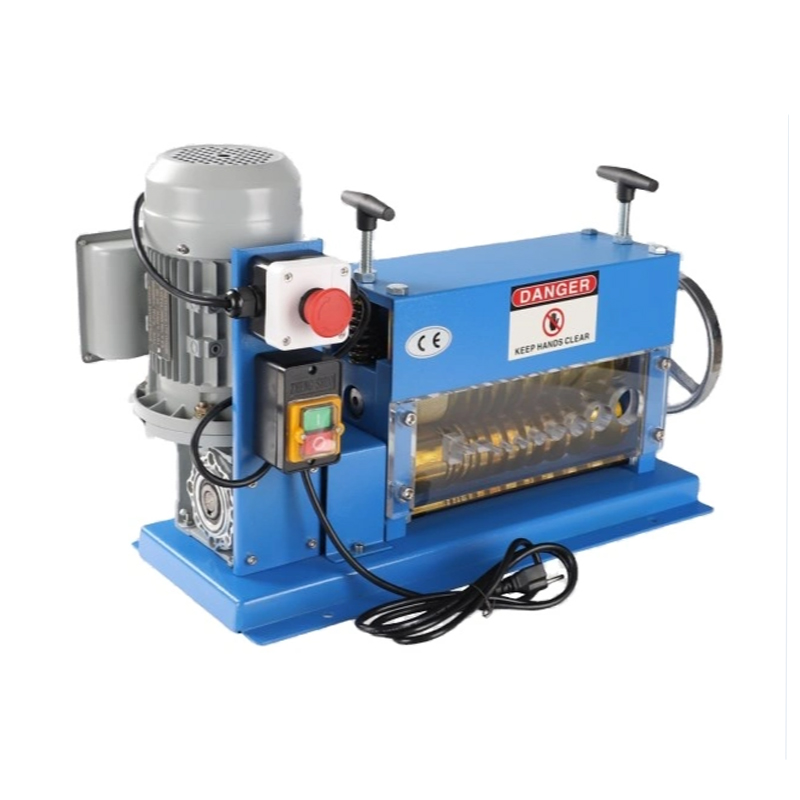
The M-038 model supports wire thickness from 1.5mm up to 38mm. This range covers many hard copper and aluminum core wires used in power cables, industrial wiring, and recycling operations. With proper hole selection, insulation can be removed smoothly while keeping the metal core intact.
Stable Cutting and Peeling for Hard Core Wires
Hard-core wires place high demands on cutting components. Weak blades wear out quickly and create rough stripping edges. This machine uses imported bearing steel for the cutter, which provides stable cutting performance over long working periods. Clean peeling helps reduce secondary handling and improves the quality of the stripped wire for later processing.
The broad sword peeling method allows insulation to be separated efficiently, especially on thicker cables. This is useful when processing waste wires where insulation materials vary between plastic and rubber.
Practical Operation in Workshop Environments
Ease of use matters in real production settings. Complicated machines slow down training and increase operational errors. This equipment is designed with straightforward operation logic, allowing workers to become familiar with it in a short time. Once installed on a workbench, it occupies limited space while maintaining stable performance.
With a compact volume of 340×650×400mm and a weight of 40KG, it can be placed in different workshop layouts without heavy structural changes. The aluminum structure keeps the body lightweight while maintaining durability for daily use.
Energy-Saving and Visual Design Considerations
Energy consumption is often overlooked in auxiliary equipment. Over time, inefficient machines add unnecessary cost. This wire stripping machine is built with energy-saving operation in mind, supporting long working hours without excessive power use. Voltage options of 110V and 220V allow it to fit different regional power standards.
Color customization, such as sea blue, yellow, or acrylic board white,e helps factories align equipment appearance with internal standards or brand image. Custom labeling is also available, which is helpful for factories that want consistent equipment identification across production lines.
Plug and Voltage Flexibility for Export and Use
Factories working with international markets often need equipment compatibility across regions. Optional plugs include American, European, Australian, and British specifications. This flexibility reduces conversion work and simplifies equipment deployment in different locations.
Such details are usually expected from a professional Multi-Hole Wire Stripping Machine Manufacturer that understands export requirements and real factory usage scenarios.
Application in Recycling and Material Recovery
In wire recycling operations, speed and consistency directly affect output value. Removing insulation cleanly helps recover copper and aluminum without damage. This machine removes plastic and rubber insulation efficiently, making it suitable for recycling lines handling mixed waste wires.
Stable stripping improves material sorting and reduces loss during downstream processing. For facilities dealing with daily batches of waste cables, automated stripping becomes a practical improvement over manual labor.