
 EN
EN  English
 русский
 Español
 عربى
عربىPneumatic Skin Stripping Machine Selection Starts With Specs
A cable-processing buyer starts with a practical question: can the machine match the cable diameter, stripping length, material, and production method used in the line? Zhejiang Wending Electromechanical Technology Co., Ltd. builds its pneumatic sheath/skin stripping series around these production variables, with several Pneumatic Skin Stripping Machine configurations for different wire-processing requirements.
Match The Machine To The Cable Before Comparing Features
For purchasing teams, the cable specification should come before the machine model. The 330/340/1350 series is designed for wire thicknesses up to 20 mm and offers stripping-length configurations of 300 mm, 400 mm, and 500 mm. The working pressure is listed at 3–7 kg, while the equipment uses an eight-roller drive with belt feeding.
A Pneumatic Skin Stripping Machine also needs to be evaluated against the insulation or sheath structure. Different cable constructions can require different cutting conditions, particularly when the outer layer must be removed without marking the conductor or deeper insulation. Wending’s 330/340/1350 model uses a PLC touch screen to set the rolling gap and rolling force, giving technicians control over the process for different cable types.
|
Buyer Requirement |
Relevant Machine Feature |
Production Consideration |
|
Cable up to 20 mm thick |
20 mm capacity on 330/340/1350 |
Confirm actual outside diameter before ordering |
|
Different stripping lengths |
300/400/500 mm configurations |
Select according to the regular stripping requirement |
|
Repeat cable orders |
Up to 100 program memories |
Store recurring processing settings |
|
Shielded cable processing |
Three-layer stripping programs |
Useful for multi-layer cable construction |
|
Longer side peeling |
Automatic left roller opening |
Left peeling length reaches 250 mm |
|
Line integration |
Optional pre-feeder, stacker, and winder |
Match accessories to material flow |
Feeding Stability Matters During Long Stripping Runs
Feeding is easy to overlook when buyers compare stripping machines by headline specifications. Yet a cutting mechanism cannot produce consistent results if the cable moves irregularly through the processing area. The eight-roller drive and belt feeding structure on the 330/340/1350 model are designed to maintain cable movement during processing.
For a pneumatic wire stripping machine, feeding performance becomes relevant when the cable is thick, long, or processed repeatedly. Buyers should review how the cable enters the machine, how firmly it is held, and whether the selected configuration suits the material’s flexibility and surface condition.
The Wending Pneumatic Skin Stripping Machine series also supports fine length programming in 0.1 mm increments on the 330/340/1350 model. This is useful when a production drawing specifies a defined exposed section. Sample testing remains necessary before mass production because cable construction, sheath hardness, and dimensional tolerance can affect the appropriate settings.
Program Memory Can Simplify Repeat Orders
Cable-processing factories often return to the same specifications after repeat orders. Re-entering parameters for every production run adds setup work and creates opportunities for incorrect settings.
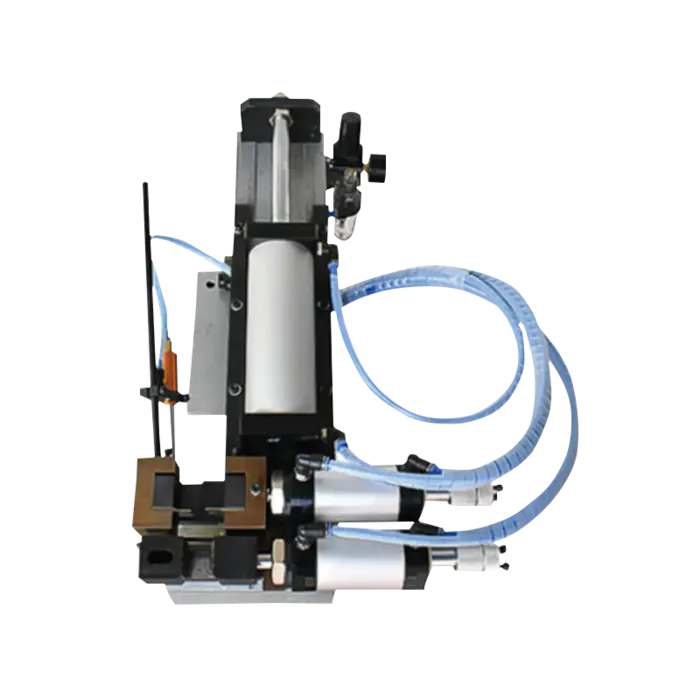
The Pneumatic Skin Stripping Machine can store up to 100 programs and provides dedicated programs for three-layer stripping of shielded cables. For purchasing managers, program capacity matters when one machine serves several recurring cable specifications.
A cable sheath stripping machine may serve several product families within one production area. Saved programs can help technicians organize processing recipes while keeping machine adjustments tied to specific cable requirements. The exact program structure should be confirmed against the buyer’s cable drawings and production samples.
Optional Modules For Different Processing Lines
For buyers selecting a Pneumatic Skin Stripping Machine, a purchase may need to account for more than the stripping head itself. Wending offers optional center-strip and slit modules for the 330/340/1350 configuration. Pre-feeders, stackers, and winders are also available.
These additions matter when stripping connects with other stages. A buyer handling continuous cable may need controlled feeding before stripping, while another line may require organized collection after processing.
Factory Engineering Supports Configuration Discussions
Zhejiang Wending Electromechanical Technology Co., Ltd. was established in 2014 and operates a factory of more than 5,000 square meters. Its organization includes R&D, production, quality, purchasing, sales, and mold R&D functions. The company manufactures wire stripping machines alongside milling machines, cutter feeders, packaging machines, and automation equipment.
For overseas buyers, this structure supports discussions about machine configuration, production requirements, and optional modules within one supplier relationship. Wending also states that it develops products according to customer drawings or samples.
Before placing an order for a Pneumatic Skin Stripping Machine, buyers can provide cable diameter, sheath construction, required stripping length, production volume, power requirement, and preferred feeding method. These details give the manufacturer a clearer basis for recommending the appropriate pneumatic stripping configuration and arranging sample tests before shipment.