
 EN
EN  English
 русский
 Español
 عربى
عربىPneumatic Skin Stripping Machine: When Air Power Speeds Up Production
Electric wire strippers work well. But in a busy workshop, speed matters. A pneumatic skin stripping machine uses compressed air instead of electric motors or hand power. The difference in cycle time is noticeable from the use.
For factories that process thousands of wires per day, a pneumatic skin stripping machine can cut stripping time by more than half compared to manual methods. The air cylinder delivers consistent force every time.
How pneumatic stripping works
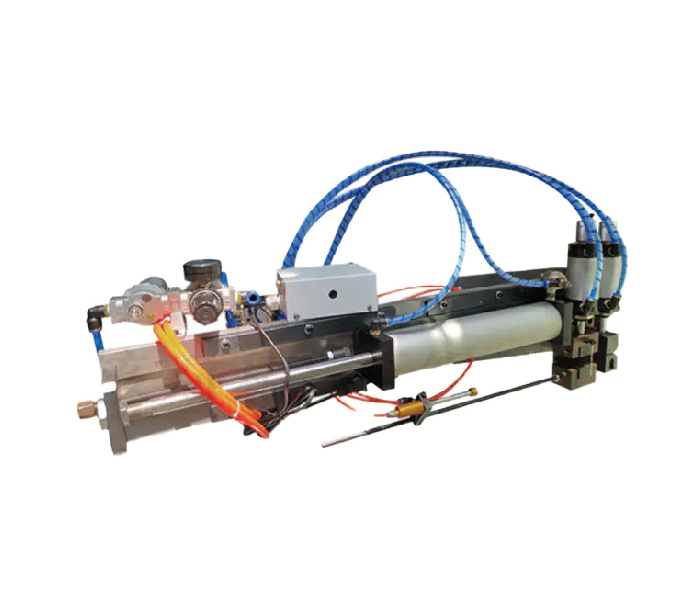
A pneumatic skin stripping machine connects to a standard shop air compressor. When the operator activates the machine, compressed air drives a cylinder. The cylinder moves the blades into the wire insulation.
Unlike electric machines that use motors and gears, a pneumatic skin stripping machine has fewer moving parts. The air cylinder extends, blades close, and the operator pulls the wire to remove the insulation.
The return stroke is also air-powered. The pneumatic skin stripping machine resets instantly, ready for the next wire. There is no waiting for a motor to cycle.
Speed advantage in production
A manual stripper might take five seconds per wire. A pneumatic skin stripping machine reduces that to two seconds or less. Over a full shift, the time saved adds up.
For a shop stripping 5,000 wires per day, a pneumatic skin stripping machine saves about four hours of labor. That is real money. The machine pays for itself in weeks, not years.
The speed of a pneumatic skin stripping machine comes from the air cylinder response. Compressed air moves fast. As soon as the valve opens, the cylinder moves. No ramp-up time.
Consistency from air pressure
Manual stripping depends on the operator's hand strength and technique. A tired worker at the end of a shift strips differently than at the start. A pneumatic skin stripping machine removes that variable.
Once you set the air pressure regulator, every cycle of the pneumatic skin stripping machine delivers the same force. The blades close to the same depth every time. Wire after wire strips identically.
This consistency is valuable for wire harness assembly. If strip lengths vary by even 1mm, terminal crimps can fail. A pneumatic skin stripping machine maintains tight tolerances shift after shift.
Blade adjustment for different wires
A pneumatic skin stripping machine typically has adjustable blades. You can set the cutting depth for different insulation thicknesses. Some models use dial knobs. Others use screw adjustments.
Changing wire types on a pneumatic skin stripping machine takes seconds. Loosen the blade adjustment, set to the new depth, tighten. The machine is ready.
For shops that process multiple wire gauges daily, a pneumatic skin stripping machine with quick-change blade adjustment is a smart choice. Look for models with external adjustment knobs that do not require tools.
Activation methods
Most pneumatic skin stripping machine models offer several ways to start the cycle. A foot pedal is the common. Your hands stay on the wire while your foot controls the machine.
Some pneumatic skin stripping machine units have a push button or thumb switch on the body. This works for occasional use or when a foot pedal is impractical.
For very high volume, some pneumatic skin stripping machine setups use a proximity sensor. The machine triggers automatically when the wire is inserted. Hands-free operation speeds up the process even more.
Air consumption requirements
A pneumatic skin stripping machine needs compressed air. Most require 60 to 90 PSI. The air consumption per cycle is low, typically 1 to 3 liters per cycle.
A small workshop compressor can easily run one pneumatic skin stripping machine. For multiple machines, calculate total air consumption. A 100-liter tank is usually sufficient for two or three units.
If your shop does not have compressed air, the cost of adding it should factor into the decision. A pneumatic skin stripping machine is only useful if air is available.
Durability in harsh environments
Electric stripping machines have sensitive electronics. Dust, moisture, and vibration can cause failures. A pneumatic skin stripping machine has no circuit boards or electric motors inside the stripping head.
The air cylinder on a pneumatic skin stripping machine is sealed. Dust and debris do not affect it as easily. For recycling yards or construction sites, a pneumatic skin stripping machine handles the environment better.
If the pneumatic skin stripping machine gets wet, it still works after drying. Electric machines may short out. Pneumatic simplicity has real advantages in rough conditions.
Maintenance requirements
Maintaining a pneumatic skin stripping machine is straightforward. Keep the air lubricator filled with oil. Drain water from the air filter regularly. Replace blades when they dull.
The air cylinder on a pneumatic skin stripping machine may need seal replacement after years of use. Seals are inexpensive and easy to change.
Compare that to an electric stripping machine. Motors wear. Circuit boards fail. Wiring corrodes. The pneumatic skin stripping machine has none of those failure points.
Is pneumatic right for you
For a home workshop or occasional use, a pneumatic skin stripping machine is overkill. A manual or small electric machine is fine.
But for any production environment, a pneumatic skin stripping machine makes sense. The speed increase pays for the machine quickly. The consistency improves quality. The durability reduces downtime.
If your shop already has compressed air, try a pneumatic skin stripping machine. You will likely wonder why you waited so long. The difference between air power and other methods is not small. It changes how fast you work and how consistent your strips are.