
 EN
EN  English
 русский
 Español
 عربى
عربىWhat Problems Can an Automatic Stripping Machine Solve in Production?
Cable processing directly affects product performance, especially in industries working with coaxial cables. Signal transmission stability depends heavily on how accurately the outer jacket, shielding, and inner insulation are removed. An Automatic Stripping Machine plays a central role in improving production consistency, reducing manual errors, and supporting stable output in cable manufacturing environments.
Factories that process coaxial cables often face challenges such as uneven stripping depth, conductor scratches, slow manual operation, and inconsistent quality between operators. These issues not only reduce production efficiency but also impact the reliability of the final cable assembly. A specialized solution designed for coaxial structures addresses these concerns directly.
Precision Matters in Coaxial Cable Stripping
Coaxial cables contain multiple layers: outer jacket, braided shielding, dielectric insulation, and central conductor. Each layer must be stripped at a controlled depth without damaging the inner structure. Even slight over-cutting can affect signal transmission.
An Automatic Stripping Machine designed for coaxial cables integrates adjustable cutting mechanisms. Blade depth, rotation angle, and stripping length can be set through a control panel. This level of adjustment allows operators to process different cable diameters while maintaining stable results.
Production Speed and Workflow Efficiency
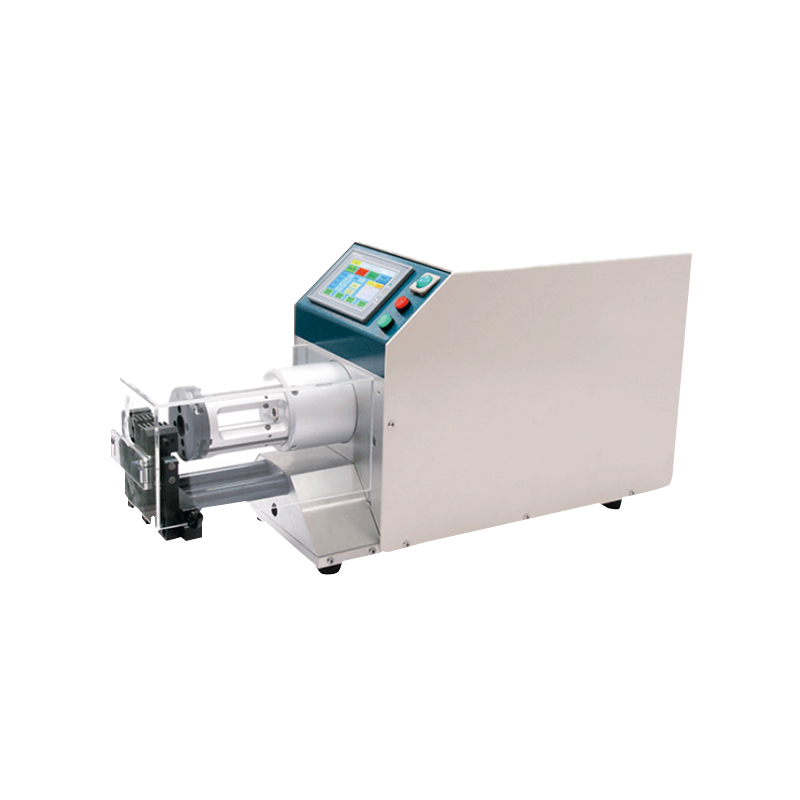
Manual stripping tools slow down output, especially in high-volume projects. Operators may require frequent adjustments, and output varies depending on experience. When production demand increases, manual processes often become a bottleneck.
An Automatic Stripping Machine improves workflow by automating repetitive cutting and stripping actions. Once parameters are set, the machine processes cables at a steady pace. This reduces idle time and supports predictable daily output.
Handling Multiple Cable Types and Sizes
Coaxial cables vary in diameter, insulation thickness, and shielding structure. Factories often need to process different cable specifications within the same workshop. Switching between models should not require complicated mechanical changes.
Modern machines are designed with flexibility in mind. By adjusting parameters through the control interface, operators can switch between cable types efficiently. Some models support both fully automated and semi-automated modes, offering flexibility depending on order size and complexity.
Choosing an experienced Automatic Stripping Machine Manufacturer makes it easier to match machine configuration with real production requirements. Technical teams with cable processing experience can guide blade design, fixture selection, and control settings.
Protecting the Conductor and Shielding Layer
One common pain point in coaxial cable stripping is conductor damage. Over-penetration during cutting may nick or weaken the central conductor. This often results in unstable signal performance during use.
A specialized Automatic Stripping Machine addresses this issue by controlling cutting depth with precision components. Rotary blades and positioning systems are designed to remove outer layers cleanly while keeping the inner core intact.
For applications requiring precise shielding exposure lengths, such as connector termination, accurate stripping length control is essential. Stable stripping dimensions support consistent assembly results downstream.
Automated and Semi-Automated Options
Production environments differ in layout and automation level. Some workshops operate fully integrated lines, while others rely on manual feeding with automated cutting.
Machines are available in both automated and semi-automated versions. Fully automated systems are suitable for continuous production, where cable feeding and stripping are programmed. Semi-automated models allow operators to load cables manually while the stripping cycle is controlled electronically.