
 EN
EN  English
 русский
 Español
 عربى
عربىWhy Is a Pneumatic Terminal Crimp Machine Still Important in Wire Processing?
Terminal Crimping Is Small in Size but Big in Daily Work
In many production environments, terminal crimping is one of those tasks that happens again and again without drawing much attention—until problems start showing up. Uneven crimping, unstable pressure, slow operation, or difficult terminal matching can all interrupt the workflow and create unnecessary rework.
That is why equipment selection matters more than it seems.
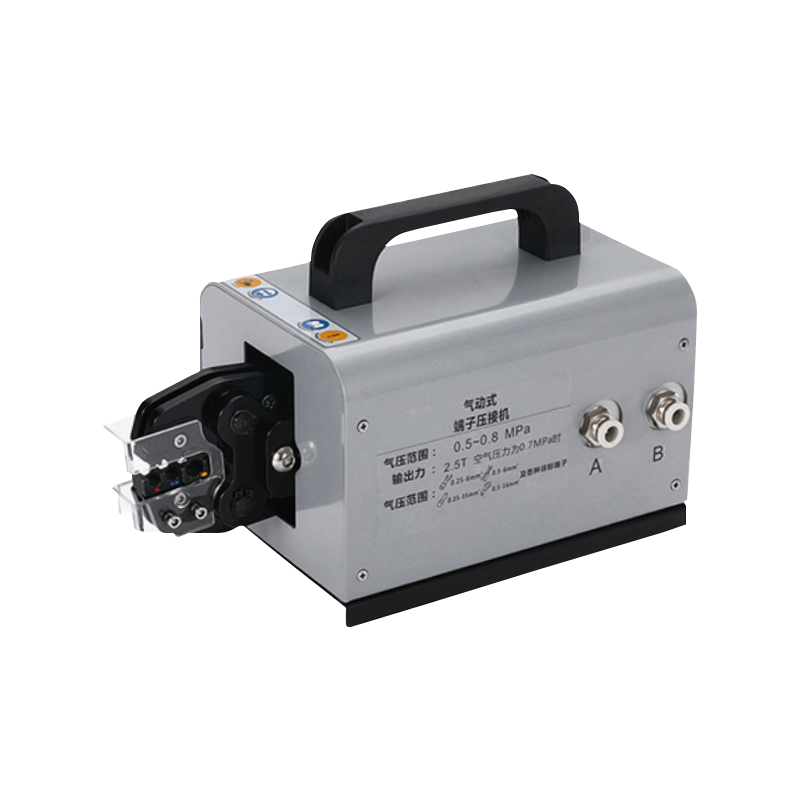
A Pneumatic Terminal Crimp Machine is built for one very practical purpose: helping terminal crimping stay more stable, more repeatable, and easier to manage during regular production. It is widely used in industries where wire connections are part of daily assembly, and where crimping quality needs to stay consistent from one batch to the next.
For many companies, choosing the right machine is only part of the process. Working with a capable Pneumatic Terminal Crimp Machine Factory also plays an important role when matching the machine to actual production needs.
What Problems Often Appear in Traditional Crimping Work?
Terminal crimping may look straightforward, but in actual use, it often brings several recurring issues—especially when production volume starts increasing.
Common pain points include:
- Terminal pressing that is not consistent
- Operators spending too much time on repeated tasks
- Different results between shifts
- Difficulty adapting to changing terminal sizes
- Delays caused by frequent manual correction
These problems may not seem serious at the beginning, but over time they affect output rhythm and assembly flow.
A Pneumatic Terminal Crimp Machine helps address these issues by turning a manually sensitive process into a more controlled and repeatable machine operation.
How Does Pneumatic Power Change the Crimping Process?
One of the biggest differences between manual crimping and pneumatic crimping is how the force is delivered.
Instead of depending heavily on hand pressure or purely mechanical action, pneumatic systems use compressed air to drive the crimping movement. This gives the machine a more stable working rhythm and makes repeated operation easier to maintain.
In daily use, this usually means:
- Faster crimping response
- More even pressing action
- Better consistency over long runs
- Smoother operation during repeated cycles
This matters a lot in production lines where terminal crimping is not an occasional task, but a routine part of assembly.
A properly designed Pneumatic Terminal Crimp Machine helps keep this step more organized and less dependent on operator variation.
Why Do Different Industries Use This Machine Type?
Terminal crimping is used across many industries, but the production demands can vary a lot from one application to another. Some workshops process smaller electronic components, while others work with larger harness assemblies or more demanding connector structures.
That is why flexibility matters.
The Pneumatic Terminal Crimp Machine Series is commonly used in industries such as:
- Electronics
- Automotive
- Aerospace
- Telecommunications
These industries all share one thing: they need terminal crimping that stays stable during repeated production.
A capable Pneumatic Terminal Crimp Machine Factory understands that the machine should not only work in theory. It needs to match the actual rhythm and variation of factory use.
Why This Machine Type Continues to Be Widely Used
Terminal crimping remains a core part of wire processing across many sectors, and that makes machine consistency highly relevant in everyday production.
A Pneumatic Terminal Crimp Machine continues to be widely used because it helps support:
- Repeated crimping work
- Stable terminal processing
- Easier workflow control
- Better fit for industrial production environments
For companies comparing different crimping solutions, choosing the right machine and the right Pneumatic Terminal Crimp Machine Factory can make the equipment selection process more practical and more aligned with actual workshop needs.