
 EN
EN  English
 русский
 Español
 عربى
عربىHow to Pick the Size of Hand Stripping Machine?
A hand stripping machine is a simple tool. But picking the wrong size makes it useless. Too small, and your wire will not fit. Too large, and the machine will not strip cleanly.
Before buying a hand stripping machine, you need to know your wire diameters. Different models handle different ranges. Matching the machine to your wire saves time and prevents damage.
Common sizes you will find
Many hand stripping machine models fall into three size categories based on the wire diameter they accept.
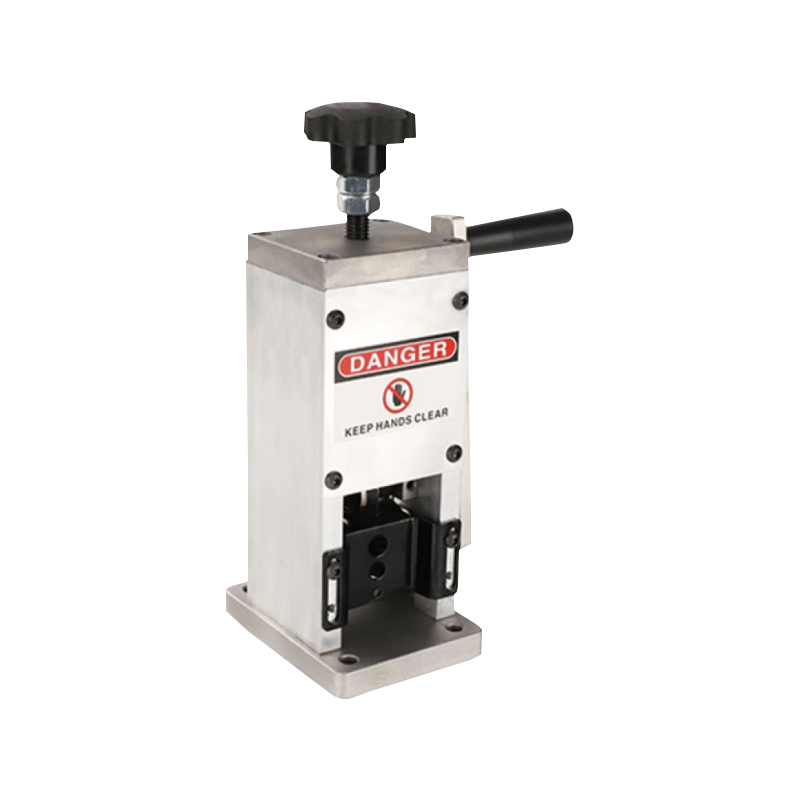
Mini models like the S-20 handle wires up to 12mm in diameter. This hand stripping machine size works well for thin cables, automotive wires, and household electrical cords. It is light and portable.
Mid-range models like the SD-025 accept wires from 1.5mm up to 25mm. This hand stripping machine covers many common recycling and workshop needs. From thin speaker wire to thick battery cable, one machine does it all.
Large manual models go beyond 25mm. These hand stripping machine units are for industrial cable recycling and heavy power cables. They are bigger, heavier, and built for continuous use.
How to measure your wire correctly
Do not guess the wire size. Use a caliper or a wire gauge tool. Measure the outer insulation diameter, not just the copper inside. The hand stripping machine cuts through the insulation, not the conductor.
Strip a small piece of insulation off a scrap wire. Measure the conductor diameter as well. Some hand stripping machine models list capacity for both insulated and bare wire.
If you work with multiple wire sizes, note the largest diameter you process regularly. That number determines which hand stripping machine you need.
Matching machine to wire diameter
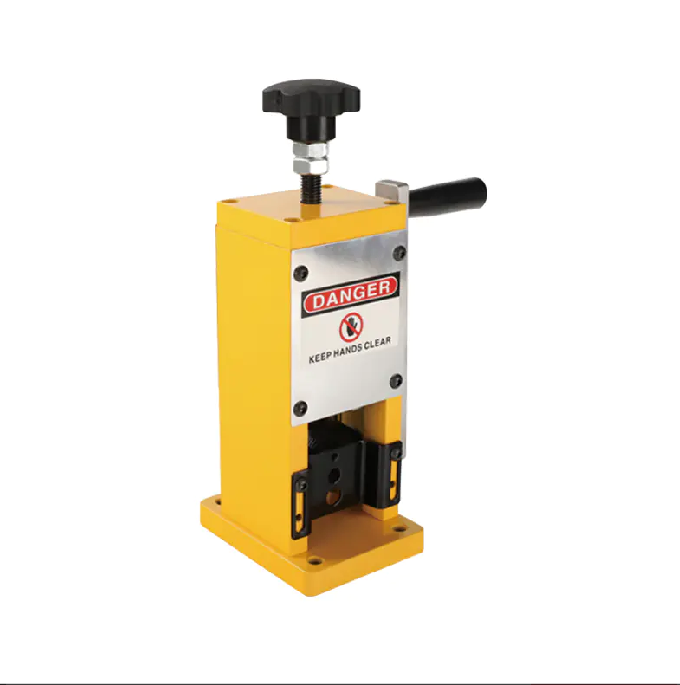
For wires up to 12mm, the S-20 hand stripping machine is a common choice. It is small enough to hold in one hand. You can carry it to job sites or keep it in a toolbox.
For wires up to 25mm, the SD-025 hand stripping machine is the next step up. It handles thicker insulation and larger copper cores. This size is popular for scrap wire recycling and workshop use.
For wires above 25mm, you need a larger hand stripping machine. These are less common but necessary for industrial cables and heavy power feeders.
Why the lower level diameter matters too
A hand stripping machine rated for 1.5mm to 25mm will strip thin wires fine. But a hand stripping machine designed only for 12mm to 25mm may struggle with small gauge wires.
The blade on a hand stripping machine needs to close enough to cut thin insulation without hitting the copper. If the machine is too large, the blade gap may not adjust down far enough.
Check the lower level diameter on any hand stripping machine you consider. If you strip thin wires regularly, choose a model that goes down to at least 1.5mm or lower.
Portable vs stationary size
Small hand stripping machine models like the S-20 are truly portable. You can put them in a bag and take them to a job site. The tradeoff is lower capacity and less leverage for tough insulation.
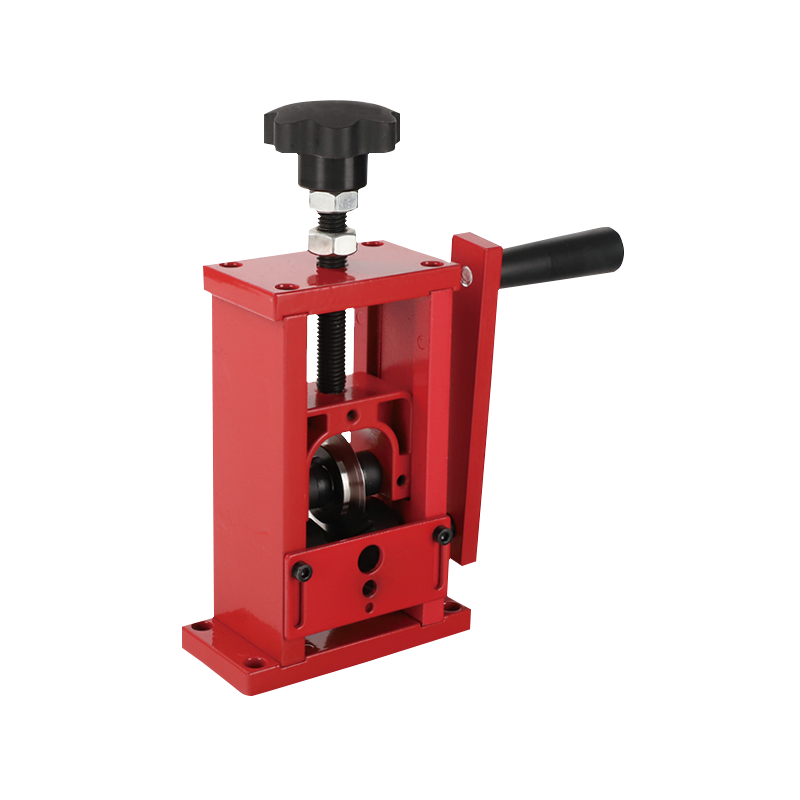
Larger hand stripping machine units like the SD-025 are usually bench-mounted. They have a handle or crank that gives more stripping power. But they are heavier and stay in one place.
Think about where you will use the hand stripping machine. If you move between locations, a smaller portable model is better. If you work at a fixed bench, a larger machine is fine.
What the numbers tell you
Model numbers like S-20 and SD-025 often hint at capacity. The "20" in S-20 sometimes means 20mm, though actual capacity is 12mm. Always check the spec sheet.
The SD-025 clearly shows 25mm capacity. That hand stripping machine number is reliable. When you see a model with a number like 025 or 25, it usually refers to higher level wire diameter in millimeters.
Do not rely on model numbers alone. Read the product description. A good hand stripping machine listing will state both lower level and higher level wire diameters clearly.
One machine or two?
If your wire diameters range from very thin (2mm) to very thick (25mm), one hand stripping machine can cover both ends. The SD-025 is designed for that full range.
But if you only strip very thin wires under 10mm, the S-20 hand stripping machine is sufficient. It is smaller, cheaper, and easier to handle.
For scrap recycling yards that process mixed wire, the SD-025 hand stripping machine is a common choice. It handles many wires that come through the door without needing multiple machines.
Checking blade adjustment
A hand stripping machine has adjustable blades. You can fine-tune the cutting depth for different insulation thicknesses.
On a quality hand stripping machine, you turn a knob or screw to move the blade in or out. This lets you cut through thick rubber insulation without cutting into the copper.
Before buying a hand stripping machine, test the adjustment range. A machine that only works for one wire diameter is not very useful. Look for a hand stripping machine with easy, tool-free adjustment.
Making your choice
To pick the right hand stripping machine, gather your many common wire types. Measure the outer diameter of each. Note the smallest and largest sizes.
If your largest wire is under 12mm, buy the S-20 hand stripping machine. It is portable, affordable, and easy to use.
If your largest wire is 25mm or you process mixed sizes, buy the SD-025 hand stripping machine. It covers the full range from thin to thick.
Do not buy a hand stripping machine based on price alone. A machine that does not fit your wires will sit unused. Match the size to your work, and the hand stripping machine will pay for itself quickly.