
 EN
EN  English
 русский
 Español
 عربى
عربىWhy Use a Pneumatic Terminal Crimping Machine?
In any wire processing workshop, terminal crimping quality is not a minor detail. A poor crimp can bring about intermittent signals, voltage drop, or even overheating inside a finished product. That is why many manufacturers now prefer a pneumatic terminal crimping machine over manual tools or simple lever crimpers. The difference shows up in repeatability, speed, and long-term reliability.
This article explains what drives that choice and how pneumatic crimping fits into real production environments.
How pressure consistency affects crimp quality
Manual crimping tools depend entirely on the person holding them. One operator may squeeze harder than another. The same operator may apply a different force by the end of a long shift. That variation directly changes crimp height and pull strength.
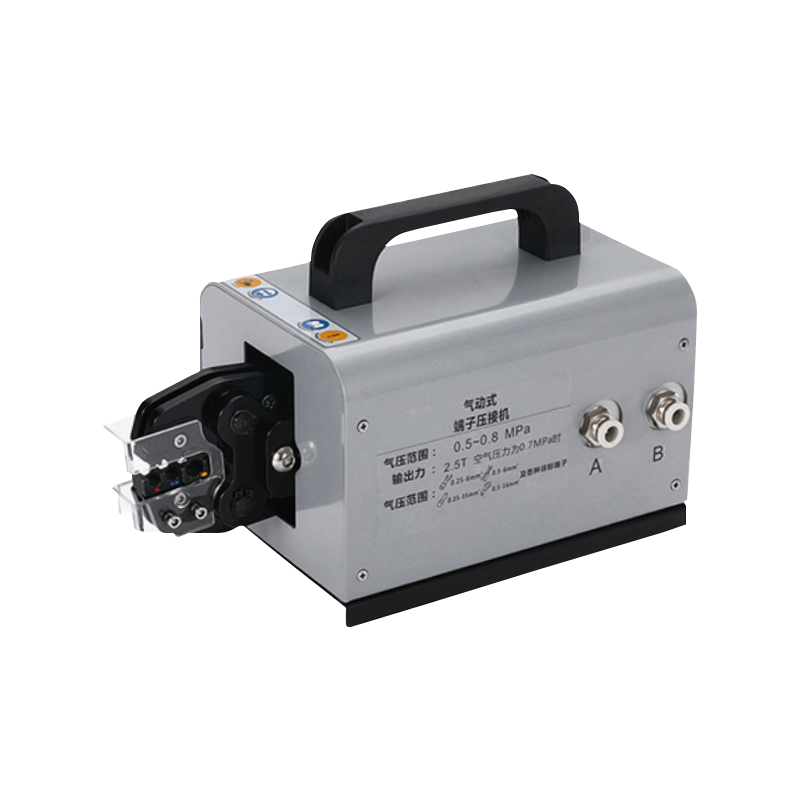
A pneumatic terminal crimping machine removes that human variable. Once you set the air pressure regulator, the cylinder delivers the same force on every cycle. The sooner the crimp of the morning matches the last crimp before break time. For factories running thousands of terminations daily, this consistency directly lowers defect rates.
Small terminals are especially sensitive. Too much pressure cracks the barrel or crushes fine copper strands. Too little pressure creates a loose connection that fails vibration testing. A pneumatic terminal crimping machine stays within a tight force window, which is hard to achieve with hand tools.
Production speed and operator fatigue
Hand crimping is repetitive work. Squeezing a tool eight hundred times per day puts strain on hands and wrists. Over time, speed drops because muscles tire. Accuracy also falls off.
With a pneumatic terminal crimping machine, the operator only positions the wire and terminal. A foot pedal or push button triggers the air cylinder, which completes the crimp instantly. The physical effort is minimal. Workers stay productive longer, and the cycle time stays steady throughout the shift.
In high-volume jobs like appliance wiring or automotive interior harnesses, that steady rhythm makes a real difference. A few tenths of a second saved per terminal adds up to hundreds more good crimps per day.
Reducing scrap and rework
Every defective terminal costs material and labor. If a bad crimp reaches final assembly, the repair takes even longer. A pneumatic terminal crimping machine reduces these failures because the mechanical action is predictable.
Many pneumatic units also accept external crimp monitors. These sensors watch the force curve during each termination. If something changes — a double-stacked terminal, missing wire strands, or worn tooling — the system alerts the operator. That kind of real-time feedback is nearly impossible with hand tools.
Lower scrap means fewer production interruptions and more predictable material usage. For lean manufacturing lines, that stability matters as much as speed.
Switching between terminal types
Few workshops crimp only one terminal model. A typical day might involve insulated spades, non-insulated rings, and open-barrel contacts. Each type needs a specific die shape and crimp height.
A good pneumatic terminal crimping machine uses interchangeable die sets. Changing from one terminal family to another takes less than a minute if the tooling is designed for quick change. This flexibility makes pneumatic equipment useful for both dedicated production cells and general assembly benches.
Instead of buying separate machines for each terminal style, one pneumatic unit covers many standard applications. That simplifies the workbench and reduces capital expenses.
Fitting into semi-automated workflows
Some factories are not ready for fully automatic stripping-crimping machines. But they still want faster processing than hand tools can offer. A pneumatic terminal crimping machine fits this middle ground well.
Operators can strip wires manually or with a benchtop stripper, then move to the pneumatic crimper for termination. The process remains flexible, while the crimping step becomes mechanical and repeatable. For short production runs or custom cable assemblies, this setup works effectively without over-investing in automation.
Long-term reliability and maintenance
Pneumatic cylinders have a simple design. Few moving parts mean fewer breakdowns. Routine maintenance includes checking the air filter, adding a few drops of oil to the line lubricator, and inspecting the foot valve occasionally.
A well-cared-for pneumatic terminal crimping machine runs for years without major service. Replacement dies and cylinders are widely available and not expensive. Compared to electric servo presses, pneumatic systems are easier to repair in-house.
Choosing a pneumatic terminal crimping machine is not about chasing a higher possible speed. It is about getting consistent, repeatable crimps across thousands of cycles while keeping operators comfortable and scrap low. For any shop that terminates more than a few hundred cables daily, pneumatic equipment delivers measurable improvements over hand tools.
The investment pays back through lower defect rates, steadier output, and fewer fatigue-related errors. That is why so many wire harness and control panel manufacturers continue to rely on pneumatic technology for daily production work.